
Fire door inspections, repairs and installation
A fire door only works if it closes fully, seals properly and has not been altered. We inspect fire doors against BS 8214 and the manufacturer's certification, repair what can be repaired and install certified doorsets, all with our own team. You get a door-by-door record with photographs, stored in our portal.
- BS 8214The basis of our checks
- Door by doorPhotos and a unique reference
- Repair or replaceA clear call on each door
- Fixed priceAgreed before we start
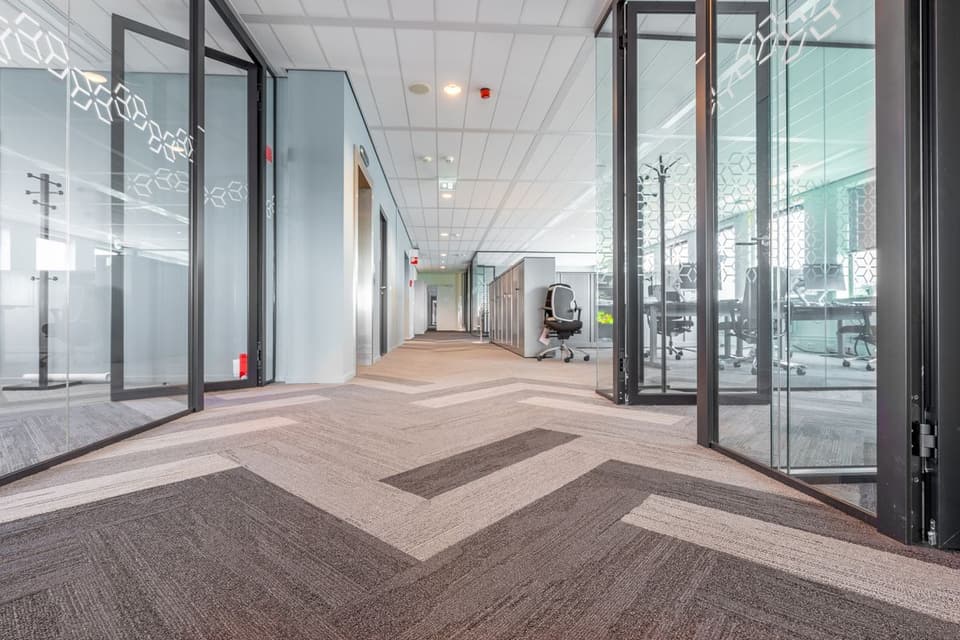
The fire safety measure that takes the most abuse
Fire doors protect escape routes and hold back fire and smoke, typically for 30 or 60 minutes. They only do that if nothing has been changed.
Closers get disconnected, seals painted over, locks changed, letterboxes and spyholes added, and doors wedged open. Many of these faults are invisible unless you know what to look for. We inspect for landlords, housing providers, HMOs, care homes, schools and commercial buildings.
In England
The Fire Safety (England) Regulations 2022 apply to residential buildings with two or more sets of flats, which must give residents fire door information. Over 11 metres, communal fire doors must be checked at least every three months, and flat entrance doors, with best endeavours, every 12 months.
In Wales
The 2022 Regulations do not apply. The Fire Safety Order still requires fire doors to be kept in efficient working order and good repair, so your fire risk assessment should set how often they are checked. Many adopt a similar regime to England's as good practice.
What we check on every door
We inspect each door as a complete doorset: leaf, frame, ironmongery, seals and glazing working together as they were tested.
Certification
A label or plug identifying the manufacturer and rating.
Gaps
Typically 2 to 4 mm at the sides and head, plus the threshold gap.
Seals
Intumescent strips and smoke seals present, continuous, undamaged and not painted over.
Closer and hinges
Closes fully into the latch from any angle; hinges complete and secure.
Ironmongery and glazing
Locks and latches suitable for a fire door; fire-rated glass with secure beads.
Condition and signage
Damage, alterations, "Fire door keep shut" signs and hold-open devices releasing on alarm.
From door count to next check due
Scope
Number and type of doors, access to flat entrance doors, inspection or works.
Inspection
Each door checked, photographed and given a unique reference and location.
Report
A door-by-door defect schedule with a repair or replace call, prioritised by risk.
Remedial works
We quote for and carry out repairs and replacements, with before and after photos.
Records
Everything in the Vocus Fire Safety Portal, with each door's next inspection date.
A history for every door
For each door you can see its location, rating, photographs, the defects found and what was done about them. That is the evidence a fire risk assessor, licensing officer, insurer or regulator will ask for, and it makes the next round of checks faster.
- Door-by-door register with photographs
- Pass, repair or replace for every door
- Before and after photos of remedial work
- Next inspection date per door, in the portal
The detail, when you need it
BS 8214, FD30, FD60 and the "S" suffix
BS 8214 is the code of practice for installing and maintaining timber fire doorsets, and is the basis for most inspection criteria. FD30 resists fire for 30 minutes and FD60 for 60 minutes; an "S" suffix, as in FD30S, means the door also restricts cold smoke, usually with a smoke seal.
The rating only holds if the door is installed and maintained as tested. Schemes such as BM TRADA Q-Mark give evidence that a doorset was made or installed to its tested specification. Without a label or paperwork we can often still assess a door, but cannot confirm its rating, and we say so in the report.
How often for offices, schools and other premises?
Outside the England 2022 Regulations there is no fixed statutory interval. In busy buildings such as schools, care homes and offices, doors take a lot of wear, so routine in-house checks plus a periodic professional inspection is sensible. Your fire risk assessment should say what is appropriate.
Fire doors in HMOs
The LACORS guide sets out where fire doors are expected in shared houses, usually on bedrooms, kitchens and doors onto the escape route. Council licensing officers in both countries check them, and missing closers or damaged doors are a common reason for enforcement action under the Housing Act 2004.
Fire doors in care homes
Doors are often held open for residents' comfort and wellbeing, so hold-open devices and free-swing closers must release reliably when the alarm sounds. Progressive horizontal evacuation depends on compartment doors closing. Inspectors from CQC in England and Care Inspectorate Wales will expect to see evidence of regular checks.
Repair or replace?
Many defects can be fixed without a new door: adjusting or replacing a closer, new intumescent strips and smoke seals, new hinges, packing or rehanging a leaf to correct gaps, or replacing unsuitable ironmongery. Repairs must use compatible, tested components so the door stays within its certification.
Replacement is usually right when the leaf is badly damaged, the gaps are too large to correct, the door has been altered beyond its certification or there is no evidence it was ever a fire door. We replace with certified doorsets, installed to the manufacturer's instructions and BS 8214.
At a glance
- Who it's for
- Landlords, housing providers, HMOs, care homes, schools and commercial buildings
- Services
- Inspection, repair and certified doorset installation
- Standard
- BS 8214 and manufacturer's certification
- You receive
- Door-by-door report with photographs, stored in the portal
- Price
- Fixed quote before we start
Speak to the team
Questions about your building or your duties? Talk them through with us before you commit to anything.
0330 133 4591Fire service experience, one accountable contract.
30+ years in Fire and Rescue
Our Managing Director, Paul Chamberlain, spent more than three decades in Fire and Rescue, from operational incident command to strategic leadership. That is the lens every assessment is written through.
Wales and England, done right
Fire safety law differs either side of the Severn. Every report and recommendation is written for the rules that actually apply to your building.
One accountable contract
Assessment, remediation and ongoing maintenance under one contract, with one point of contact. No gaps between contractors for you to manage.
Every record in one place
Reports, certificates and next-due dates for every site in the Vocus Fire Safety Portal, ready to show an inspector, insurer or auditor.
Fire door questions
Short answers to what people ask us most. Can't see yours? Call us on 0330 133 4591.
How often do fire doors need to be inspected?
In England, residential buildings over 11 metres with two or more flats need quarterly checks of communal fire doors and best-endeavours annual checks of flat entrance doors. In Wales, and for other premises in both countries, there is no fixed interval: doors must be maintained, and your fire risk assessment should set the frequency. Busy communal doors usually need checking more often than lightly used ones.
What gap should there be around a fire door?
Gaps between the leaf and frame are typically expected to be within 2 to 4 mm at the sides and head. The acceptable gap at the bottom depends on the door's certification and whether it needs to restrict smoke. Always check against the manufacturer's data for that doorset.
What does FD30 or FD60 mean?
It is the door's fire resistance: FD30 resists fire for 30 minutes and FD60 for 60 minutes when installed as tested. An "S" suffix, such as FD30S, means it also limits the passage of smoke. The required rating comes from the building's design or fire risk assessment.
Who is responsible for flat entrance doors?
The Fire Safety Act 2021 confirmed that flat entrance doors in multi-occupied residential buildings fall within the Fire Safety Order, so the Responsible Person must consider them in the fire risk assessment. Who owns and must repair the door depends on the lease or occupation contract. In England, the Responsible Person for buildings over 11 metres must also use best endeavours to check them annually.
Can a damaged fire door be repaired?
Often, yes. Closers, seals, hinges and ironmongery can be replaced and gaps corrected with compatible, tested components. If the leaf is badly damaged, has been altered beyond its certification, or cannot be identified as a fire door, replacement with a certified doorset is usually the right answer.
Can fire doors in a care home be held open?
Yes, if they are fitted with hold-open devices or free-swing closers that release automatically when the fire alarm operates. Wedges and other makeshift methods are not acceptable. The devices need regular testing along with the alarm system.
Do I need a certified installer for new fire doors?
It is not a legal requirement, but it is strongly recommended. A door is only as good as its installation, and third-party certification gives independent evidence that it was fitted to its tested specification. At minimum, keep the doorset certificate and installation records.
Services
Sectors
Further reading: Fire door checks for landlords in England and Wales · The Responsible Person in a block of flats
Book a fire door inspection
Tell us how many doors you have and what type of building they are in. We will confirm the scope and a fixed price for the inspection, and quote any repairs separately.